Communal laundry mixes everyone
Sleepaway camps wash whole cabins together. An unlabelled t-shirt does not come back wrong, it simply does not come back, because there is no way for anyone to work out whose it was.
Camp packing lists assume no laundry at home for a fortnight, and whatever is left in lost and found gets donated at the end of the session. Label it once, properly, before the trunk closes.
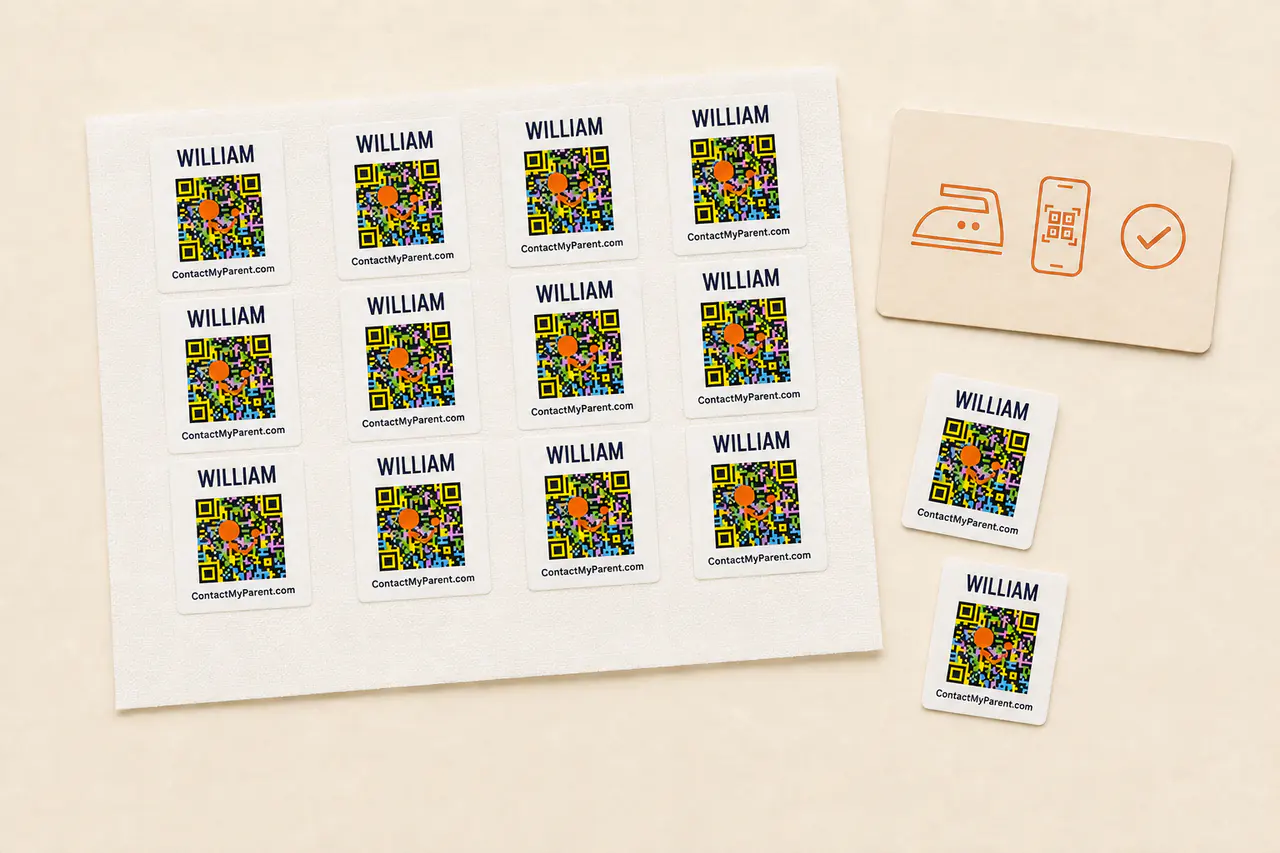
Why camp is the hardest labelling job
School loses one jumper at a time and you are there to notice. Camp loses things for a fortnight while you are two hundred miles away.
Sleepaway camps wash whole cabins together. An unlabelled t-shirt does not come back wrong, it simply does not come back, because there is no way for anyone to work out whose it was.
At school you notice a missing coat that afternoon. At camp nobody notices until the trunk is unpacked at home, by which time lost and found has usually been cleared and donated.
A one to two week list runs to fifty or sixty items once towels, bedding and kit are counted. It is the largest labelling job most families ever do, and it happens in a single sitting the week before.
Specifications
What to label
Camps vary and your joining pack wins over this list. Our summer camp packing list has one and two week quantities and a free printable.
Packs
Every pack includes one contact profile with free updates. The name label calculator has a camp preset that counts a one to two week list for you.
Day camp, where most clothing comes home each evening
$14for 10 labels
A short session, or topping up labels you already own
$24for 25 labels
A one to two week sleepaway list, including towels and bedding
$39for 50 labels
Getting set up
Do it with the camp packing list in front of you rather than from memory. That list is the count.
Camps send a packing list with quantities. Use it directly rather than guessing, because the towel and bedding lines are the ones families forget and they are bulky items to lose.
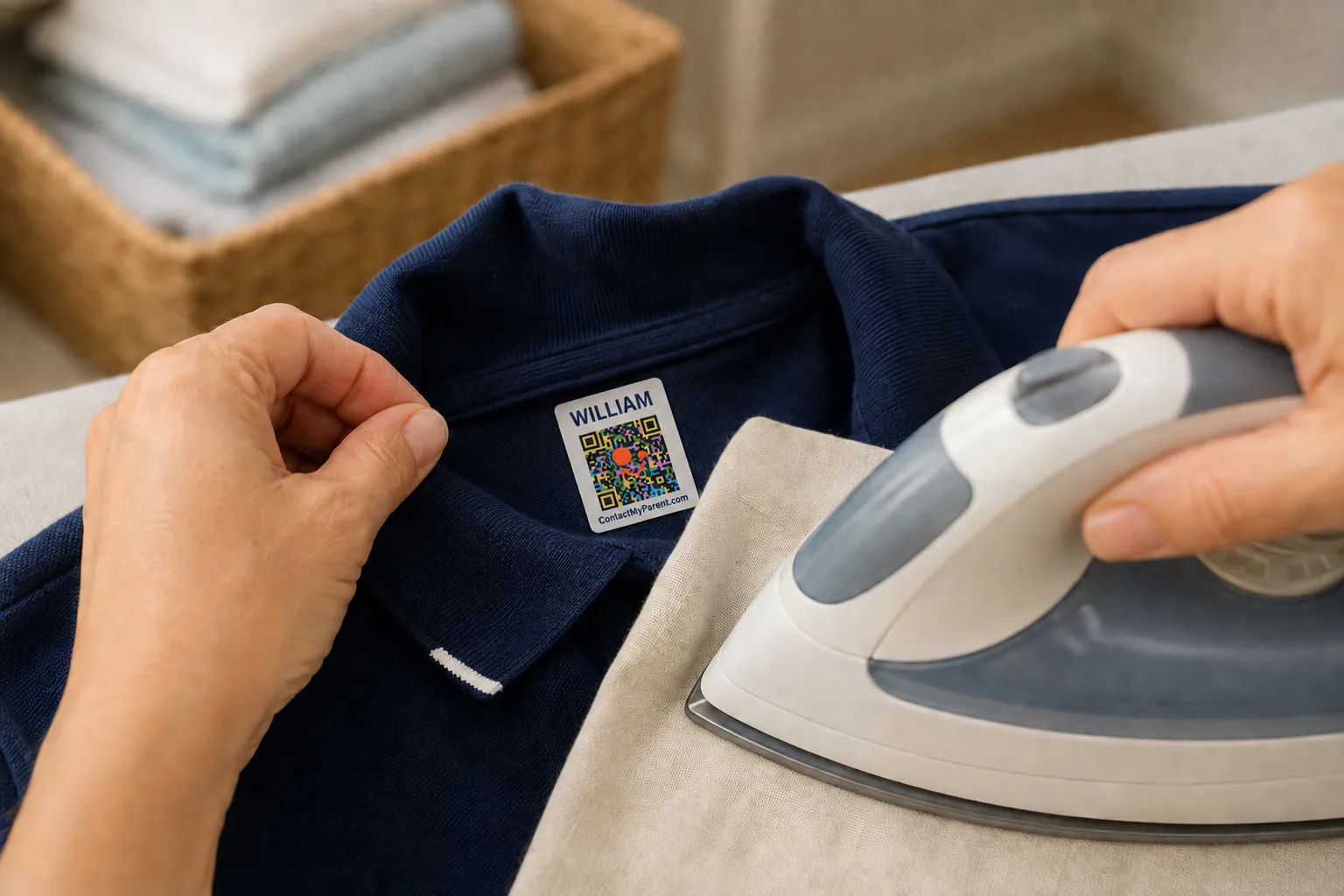
Iron-on labels go onto suitable garment fabric or onto the care tag already inside the item. Working tag to tag is fastest when you have fifty items to get through.
Enter the bundle code from your pack, add your child's first name and the numbers to reach you. Add a second contact, since camp sessions are exactly when one parent is unreachable.
Choose whether a finder sees your details or only a message form. Most families publish a first name and one number, and nothing naming the camp or the child's home town.
What a finder sees
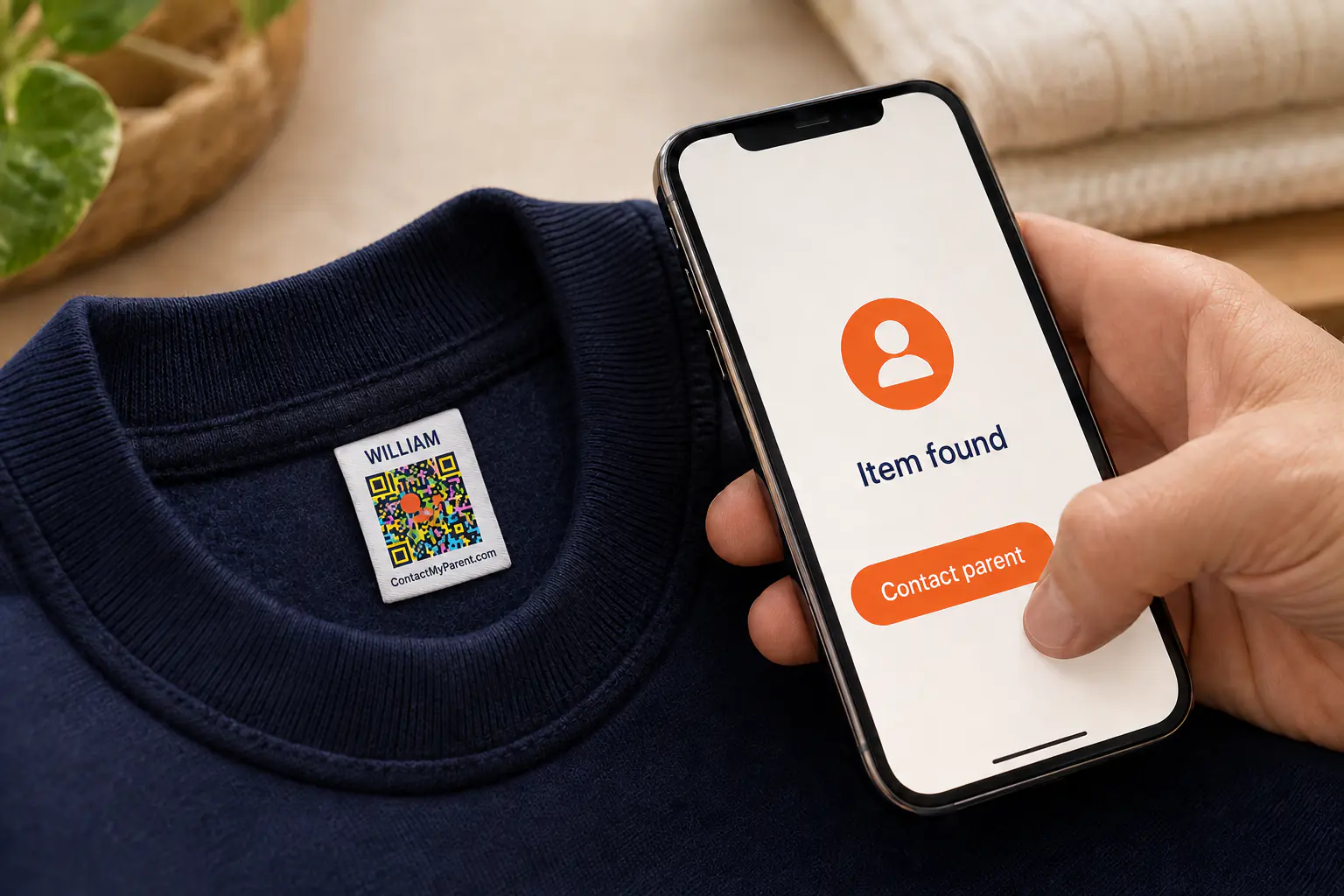
A duffel gets swapped, a fleece comes back in someone else's laundry, a water bottle surfaces at the coach park weeks later. Whoever ends up holding it points a phone at the code and reaches you, with nothing to install and no account to make. Packing an AirTag too? See which AirTag holders for kids stay on, and which a camper can take off.
Questions parents ask
More than for school, because camp packing lists assume no laundry at home for the whole session. A one to two week sleepaway list, counted properly, usually runs to somewhere around 50 to 60 items once clothing, towels, bedding and gear are included. The name label calculator on this site has a camp preset that counts it for you.
Most sleepaway camps ask for it explicitly in the joining pack, and many day camps do too. The reason is communal laundry and shared cabins: an unlabelled sock has no route home. Camps typically donate whatever is left in lost and found at the end of the session, so an unlabelled item is usually gone for good.
Inside camp, it does not. Counsellors match a printed name to a camper from the roster, and any name label does that. The code matters for what happens after: an item that goes home in the wrong duffel, something handed in weeks later, or gear left at a bus stop or a swim meet. At that point a name tells a stranger nothing about how to reach you.
Iron-on labels apply either to suitable garment fabric or to the heat-safe care tag already sewn inside the item. For camp, the care tag is usually easiest, because you are labelling a large volume of items quickly and the tag is a consistent target on almost everything.
Towels and most soft kit take an iron-on label the same way clothing does, on the care tag where there is one. Hard items such as water bottles, torches and equipment cases need a sticker rather than an iron-on, and our waterproof QR stickers are not open for orders yet, so ask us about availability for those.
The labels do not, and neither does the profile. The label points at a profile rather than at a printed phone number, so if your number or your emergency contact changes between one summer and the next, you update it online and every item already labelled is current.
Also labelling for school, daycare or everything else your kids own? Every page uses the same labels and the same packs.
Towels, fleece and the sleeping bag first. Those are the three that end up in the donation pile.