Caregiver guide
Dementia patient wandering systems and devices compared
Nine kinds of device, from a $25 door chime to a facility WanderGuard system, on what they cost, what they actually do, and the one question most comparisons skip: does it still work when your parent takes it off?
Author: Muarij Kerio · Prices checked September 2026 · Sourced from the Alzheimer's Association, the National Institute on Aging, the University of Waterloo and the makers, linked inline · General information, not medical advice
Which patient wandering system do you need?
Patient wandering systems do three different jobs. Wander prevention systems, such as out-of-sight locks and visual cues, make an exit less likely. Wandering alarms for dementia, including door sensors and pressure mats, alert a caregiver. GPS, radio-frequency programs and identification help locate or identify the person after they leave. A practical home plan uses more than one job: prevention, an alert, a way to search and identification a finder can use.
The scale justifies the layering. The Alzheimer's Association reports that six in 10 people living with dementia will wander at least once, many repeatedly, and that many who wander are found within 1.5 miles of where they disappeared. (Alzheimer's Association, Wandering) We collected the incident-level research behind these numbers in dementia wandering statistics.
The University of Waterloo's aging research program, which catalogs locator devices for people at risk of going missing, puts the boundary in one sentence: “no one product or strategy can guarantee the safety of a person with dementia.” (University of Waterloo, Locator devices)
Nine patient wandering devices side by side
Prices are US retail as published by the makers or their authorized sellers in September 2026 and move often; the ongoing column is the one that decides the real cost after a year. The fifth column is the one to read first if your parent removes things.
| Device | What it does | Cost to start | Ongoing | Stays on someone who removes things? | Weak spot |
|---|---|---|---|---|---|
| Door alarm or chime with caregiver pager | Tells you the moment a door opens | $25 to $170 | None | Not worn, so yes | Only useful if someone is home and awake to hear it |
| Pressure mat at bedside or door | Alerts as they stand up, before they reach a door | $115 to $190 | None | Not worn, so yes | Trip hazard if badly placed; pager must be within range |
| Facility wander system (WanderGuard BLUE and similar) | Bracelet triggers a door alarm and can lock the door as the resident approaches | Quoted to the facility, not sold for homes | Facility bears it | Bracelet can be removed; staff check it daily | Institutional only; over 9,000 senior living communities, zero private homes |
| GPS wearable (AngelSense and similar) | Live location, geofence alerts, two-way speaker | Device about $229, often discounted to free | $35 to $65 a month | No, it must be worn or carried | Charging every day or two; useless in a drawer |
| GPS insole (GPS SmartSole) | Tracker hidden inside the shoe insole | About $299 | About $35 a month | Partly: hidden, but only in that pair of shoes | Nightly charging; slippers at night carry nothing |
| Bluetooth tag (Apple AirTag, similar tags) | Shows last location relayed by passing phones | About $29 | None; battery about a year | No, it must be in a pocket or bag | Not live tracking; Apple says it is designed for belongings, not people |
| Radio frequency bracelet (Project Lifesaver) | Local police or fire team tracks the transmitter with a receiver | Often free through the agency; $275 to $400 where charged | $7 to $30 a month where charged; monthly battery and band change | Bracelet is locked on, but the search needs a trained team | Only in counties that run the program; range about a mile on the ground |
| Medical ID plus response service (MedicAlert Safe and Found) | Responders read the ID and call a 24-hour line that holds the profile | ID jewelry plus membership | $75 a year | No, jewelry is frequently taken off | Works only when a responder reads it and calls |
| QR clothing labels (ContactMyParent) | Anyone who finds them scans the care tag and reaches you | $14 for 10 labels | None | Yes, it is part of the clothing | Does nothing to prevent the walk; needs a finder with a phone |
Sources for the figures: AngelSense, Securitas Healthcare (WanderGuard BLUE), Project Lifesaver FAQ and member agency pages, MedicAlert membership plans, Apple Newsroom, February 2022. Door alarm and mat prices are from Smart Caregiver and Amazon listings.
Wander prevention systems and home alarms
Door alarms and chimes. The Alzheimer's Association's own list starts here: install warning bells above doors or use a monitoring device that signals when a door is opened. A wireless door sensor paired with a pager you keep by the bed costs from about $25 and needs nothing from the person. Avoid sirens at the exit; an alarm that frightens someone who is already confused makes the next ten minutes worse, not better.
Pressure mats. A mat at the bedside alerts you as they stand, which is minutes before a door alarm would. Systems with a cordless mat and a pager run $115 to $190. Place the mat so it is stepped on, not tripped over, and test that the pager reaches wherever you sleep.
Locks out of habit's reach. A deadbolt fitted high or low on the door is outside the line of sight the person has used for seventy years, so the door simply seems stuck. Keep the key beside the door. A lock nobody can open in a fire is not a safety measure.
Facility wander management. When people search for “wander guard”, this is what they mean: a bracelet carrying a radio or Bluetooth tag, and controllers on the exits that alarm and can lock the door as the resident approaches. Securitas Healthcare's WanderGuard BLUE is the best known, in use across more than 9,000 senior living communities. It is sold and installed to facilities, not homes, so if a care home tells you they “have WanderGuard”, the useful questions are how often the bracelets are checked, what happens at the door, and who responds. (Securitas Healthcare, WanderGuard BLUE)
Devices that find them once they are out
GPS wearables. A dedicated senior GPS tracker gives live location, a geofence that alerts you when they cross it, and usually a two-way speaker. AngelSense, the category's best-known name, lists its device at $229 (frequently promoted to free with a contract) and service at roughly $35 to $65 a month depending on the term. The Alzheimer's Association suggests a GPS device particularly for a person who is still safely able to drive. The weakness is not the technology; it is that the device must be on the person and charged. Waterloo's catalog notes GPS gives precise locating outdoors but that buildings and trees limit it, and that units need frequent charging.
GPS insoles. GPS SmartSole hides the tracker in a shoe insole, about $299 plus about $35 a month. It is the one tracker that does not ask the person to cooperate, which makes it the right answer for someone who strips off wearables. It only works in that pair of shoes, so a person who leaves in slippers at 3am carries nothing, and the insole charges overnight, which is exactly when night wandering happens.
Bluetooth tags. An Apple AirTag costs about $29 with no fee and a battery that lasts about a year, and it is tempting. Understand what it is: it reports the last place it was seen by a passing Apple device, not a live position, so a rural road with no phones on it produces nothing. Apple itself has said AirTag was designed to help people locate their personal belongings, not to track people, and both iPhone and Android now warn a person that an unknown tag is traveling with them, which can prompt exactly the person you are trying to protect to hand it to a stranger. (Apple, February 2022; Apple, May 2024) We wrote a longer piece on these limits in AirTags for kids; the physics is the same at 80 as at 8.
Radio frequency bracelets. Project Lifesaver is the opposite model: a locked-on wrist transmitter and a trained local police or fire team with a receiver, not an app. The program reports its recoveries average about 30 minutes, with ground range around a mile. It exists only where a local agency runs it, and costs vary by agency: many issue bracelets free through grants, others charge $275 to $400 to enroll and $7 to $30 a month, and the battery and band are changed monthly. (Project Lifesaver, FAQ) Call your sheriff's office and ask; it is the best value on this page where it exists.
Identification that works when the device is not there
Every tracker above shares one failure: it has to be with the person. Identification is the fallback for the day it is not, and it comes in two forms that suit two different finders.
Medical ID with a response service. Paramedics and police are trained to look for engraved jewelry. MedicAlert's Safe and Found plan, the tier that includes wandering support, is $75 a year plus the ID itself, and gives responders a 24-hour line holding the medical profile and your contacts. (MedicAlert, membership plans) The National Institute on Aging recommends enrolling, and adds the caveat that decides the next paragraph: “If you think the person might remove an ID bracelet, label their clothes with a name and phone number.” (NIA, Wandering and getting lost)
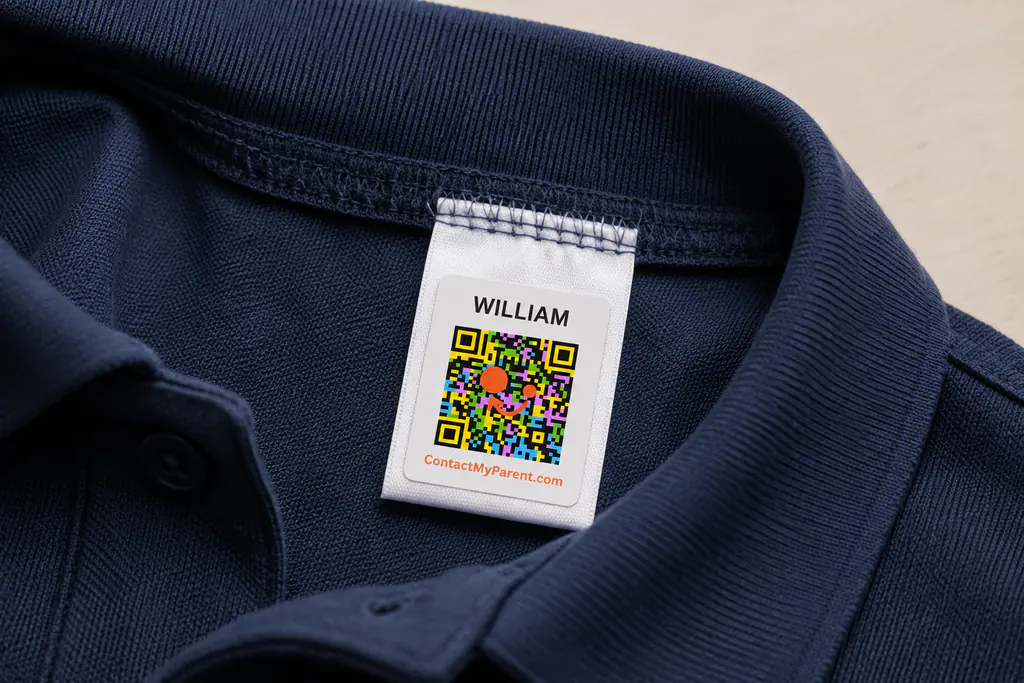
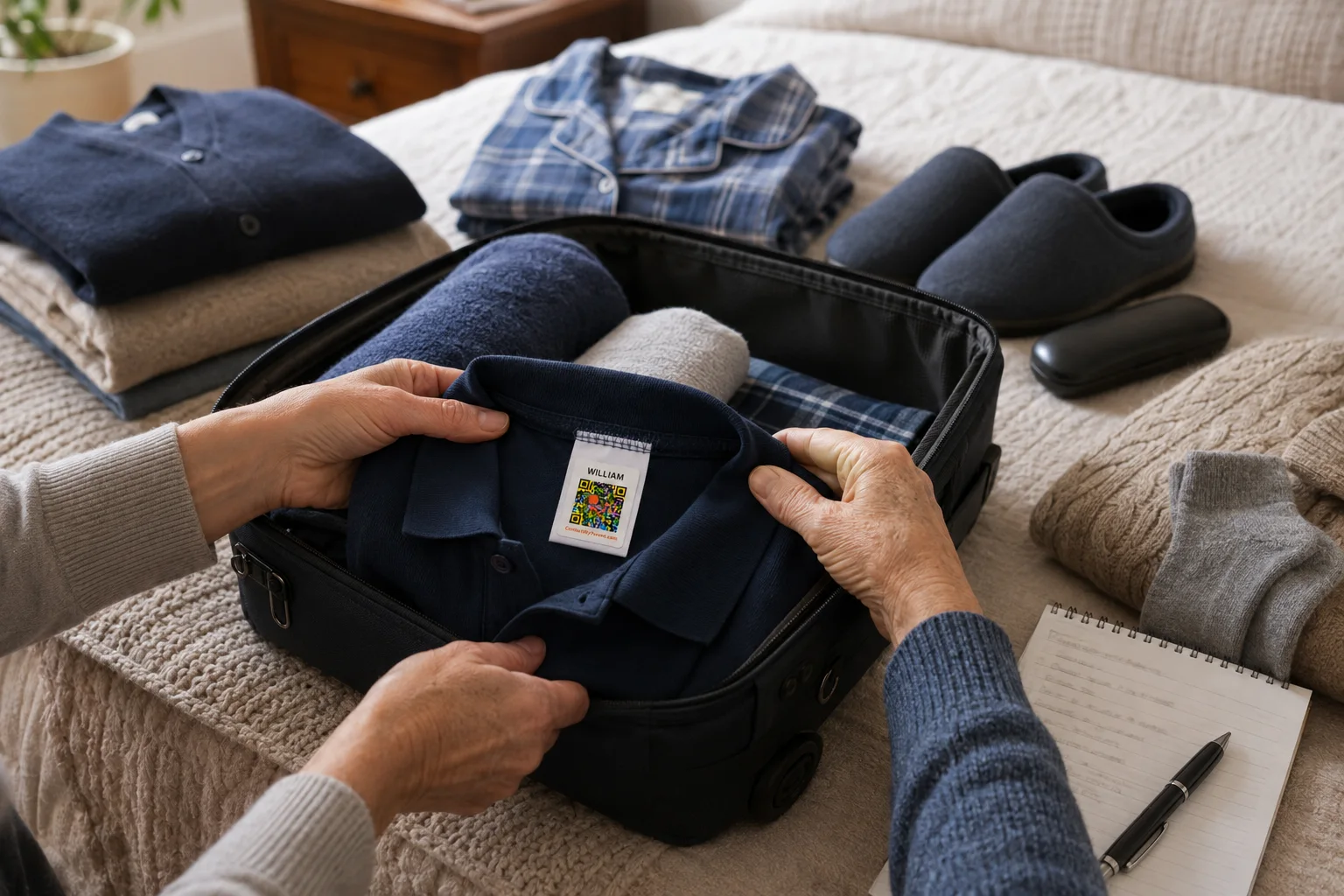
Labels inside the clothing. A name and number on the care tag or inside the collar cannot be removed by the wearer, never needs charging, and is read by the person most likely to find your parent: a neighbor, a shop worker, a bus driver, who has a phone but no receiver and no training.
Where our label sits in this table
ContactMyParent dementia clothing labels iron onto the care tag of every garment, survive facility laundry, and carry a QR code that any phone camera opens with no app. The finder sees the name, who to call, and anything you chose to add, such as a diagnosis or how to reassure the person. You update it online and never replace a label.
The honest boundary. It prevents nothing and tracks nothing. It does not replace engraved medical jewelry or a response service, because a paramedic will not scan a QR code. It is a $14 layer for the moment the bracelet is off and the tracker is on the charger, and for the finder who has a phone and thirty seconds.

How to choose: four questions
- 1
Do they take things off?
If watches, bracelets and pendants come off within the hour, cross out every device that has to be worn and move to what lives in the environment: door alarms, pressure mats, a hidden insole for the daytime shoes, and labels inside the clothes.
- 2
Home or facility?
At home, you are the responder, so the alert has to reach you where you sleep: a pager or a phone, not a siren at the door. In a facility, ask what wander management system they run, how often bracelets are checked, and whether the labels you put in the clothing survive their laundry.
- 3
Town or countryside?
GPS is weakest indoors and among tall buildings. Bluetooth tags need other people's phones passing by, which a rural road does not supply. Radio frequency and a trained local team do not care about signal, which is why Project Lifesaver started in rural sheriff's offices.
- 4
Who will actually find them?
The Alzheimer's Association reports that many people who wander are found within 1.5 miles of where they disappeared, by whoever happens to be there. Ask of each device: does it help that person, or only you? A tracker helps you. A label and an ID help them.
Whatever you buy, have these in place
A recent close-up photo on your phone and printed. Neighbors and the local police told in advance that the person may wander. The 15-minute rule from the Alzheimer's Association: search the immediate area and the places they used to go, and if they are not found within 15 minutes, call 911 and report a missing person with dementia. Our night wandering guide has the routine and home changes that reduce the walks in the first place, with a printable safety plan.
Questions caregivers ask
What is the best GPS tracker for dementia patients?
The one that stays on the person. For someone who tolerates a wearable, a dedicated senior GPS device with a geofence and a two-way speaker, such as AngelSense, gives live location for a monthly fee of roughly $35 to $65. For someone who removes wearables, a GPS insole hidden in their everyday shoes is the only tracker that does not rely on cooperation, at about $299 plus $35 a month. Neither works in a drawer or on a charger, so count the charging burden before the features.
Can I use a WanderGuard system at home?
Not as sold. WanderGuard BLUE and similar systems are installed in senior living communities and hospitals, with door controllers wired to the exits and bracelets managed by staff. The home equivalent is a wireless door sensor paired with a caregiver pager, from about $25, plus a pressure mat by the bed if you want warning before they reach the door.
Do door alarms frighten people with dementia?
A siren at the door can, and it can also escalate an agitated person. Choose a system that pages you or chimes softly rather than one that sounds at the exit, and combine it with a cue that removes the reason to leave: a lit path to the bathroom, a drink by the bed, a door covered by a curtain so it reads as a wall.
Does Medicare pay for a dementia tracking device?
Original Medicare does not treat GPS trackers, door alarms or ID jewelry as covered medical equipment. Some Medicaid waiver programs, Area Agencies on Aging and local Alzheimer's Association chapters fund devices or enrollment, and Project Lifesaver is often free through the sheriff's office. Ask your local chapter before paying retail.
Is there a free GPS tracker for dementia patients?
Not a true GPS one. What is often free is Project Lifesaver, a radio frequency bracelet program run by local law enforcement and funded by grants and donations; where it is charged, expect $275 to $400 to start and a small monthly fee. Some device makers also run free-device promotions in exchange for a service contract, which is a subscription rather than a free tracker.
What if my parent refuses to wear anything?
Stop fighting the wrist. Put the alerting in the house (door sensor, pressure mat), put a hidden tracker in the shoes they wear out if you can afford one, and put identification in the clothing itself. The National Institute on Aging says it plainly: if you think the person might remove an ID bracelet, label their clothes with a name and phone number.