Why clothing, not just a wrist
Six in ten people living with dementia will wander at least once
That figure is from the Alzheimer's Association. Most families already own a bracelet. This is the layer for the day it is not on.
Bracelets come off. Clothes go out the door.
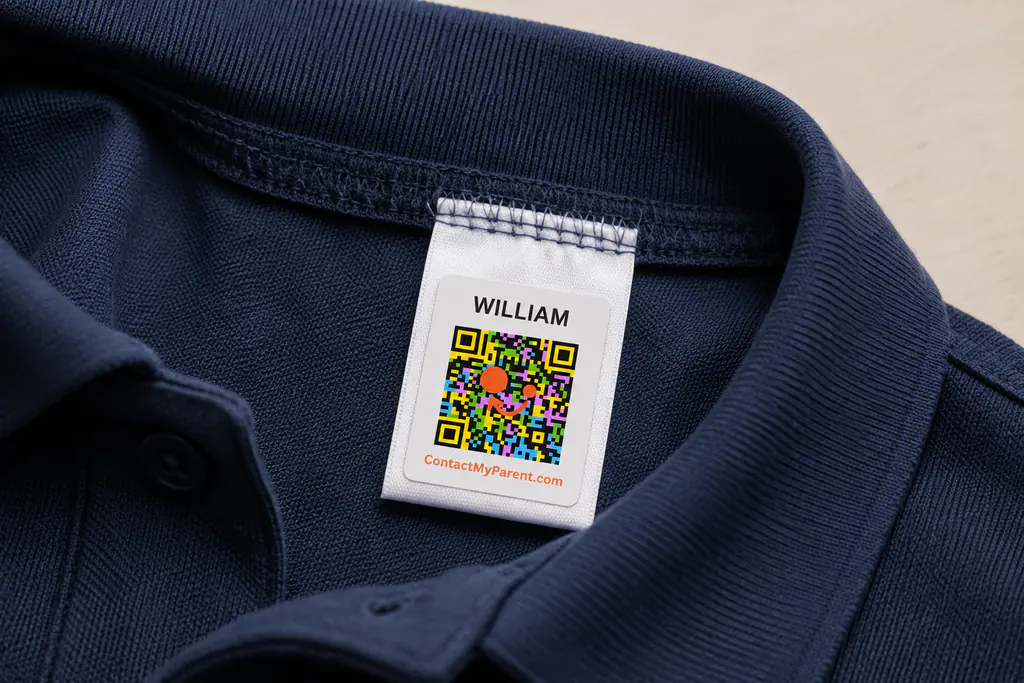
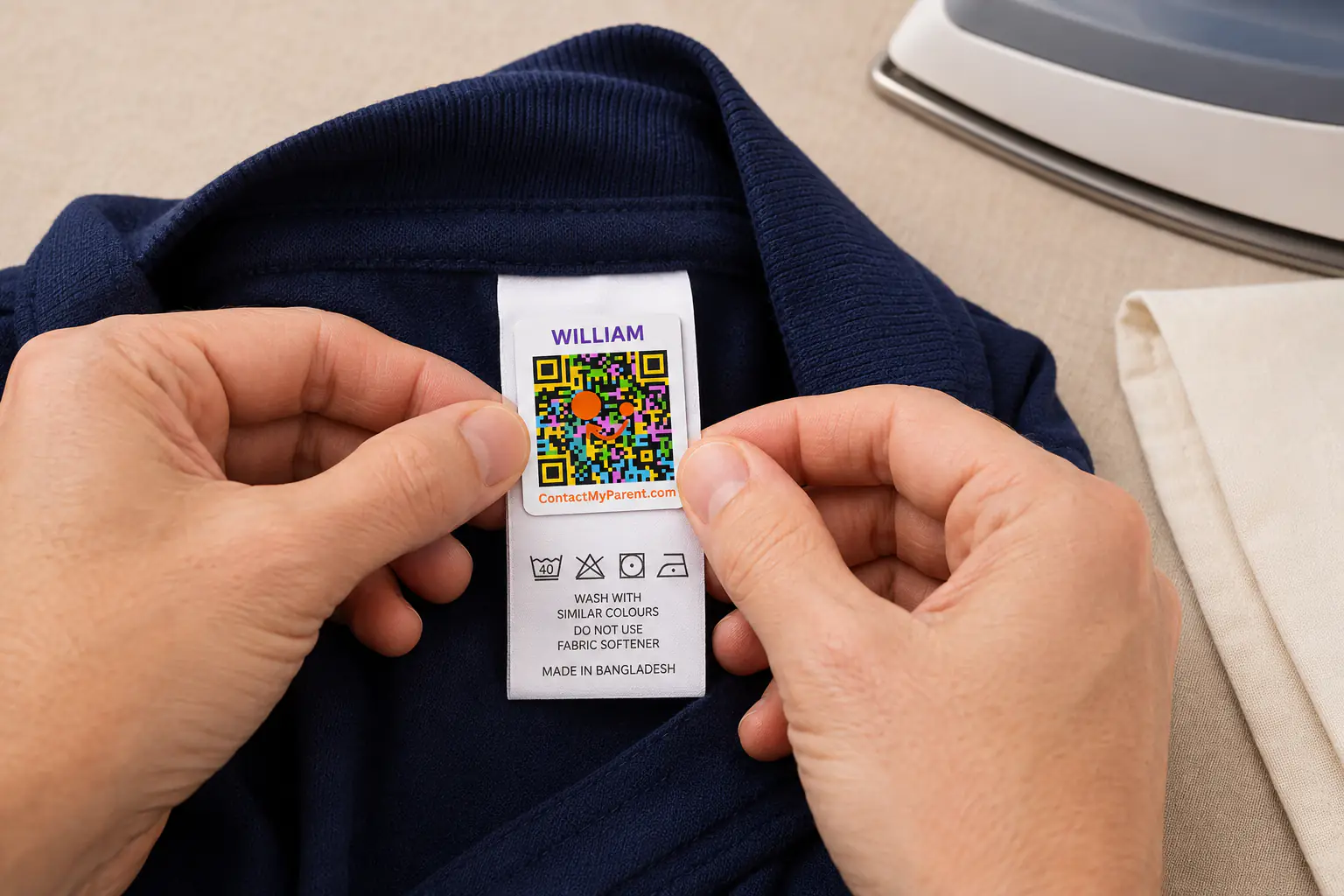
Many people living with dementia remove wristbands, pendants and watches, or refuse to wear them. The National Institute on Aging's advice is direct: if you think the person might remove an ID bracelet, label their clothes with a name and phone number. A label inside the collar or on the care tag leaves the house with them without being noticed.
Nursing home laundry mixes everyone's clothing.
Care homes and assisted living facilities wash dozens of residents' clothes together at high temperatures. Most ask families to label every garment before move-in, and unlabeled clothing is the first thing to go missing. A permanent iron-on label brings the right cardigan back to the right room.
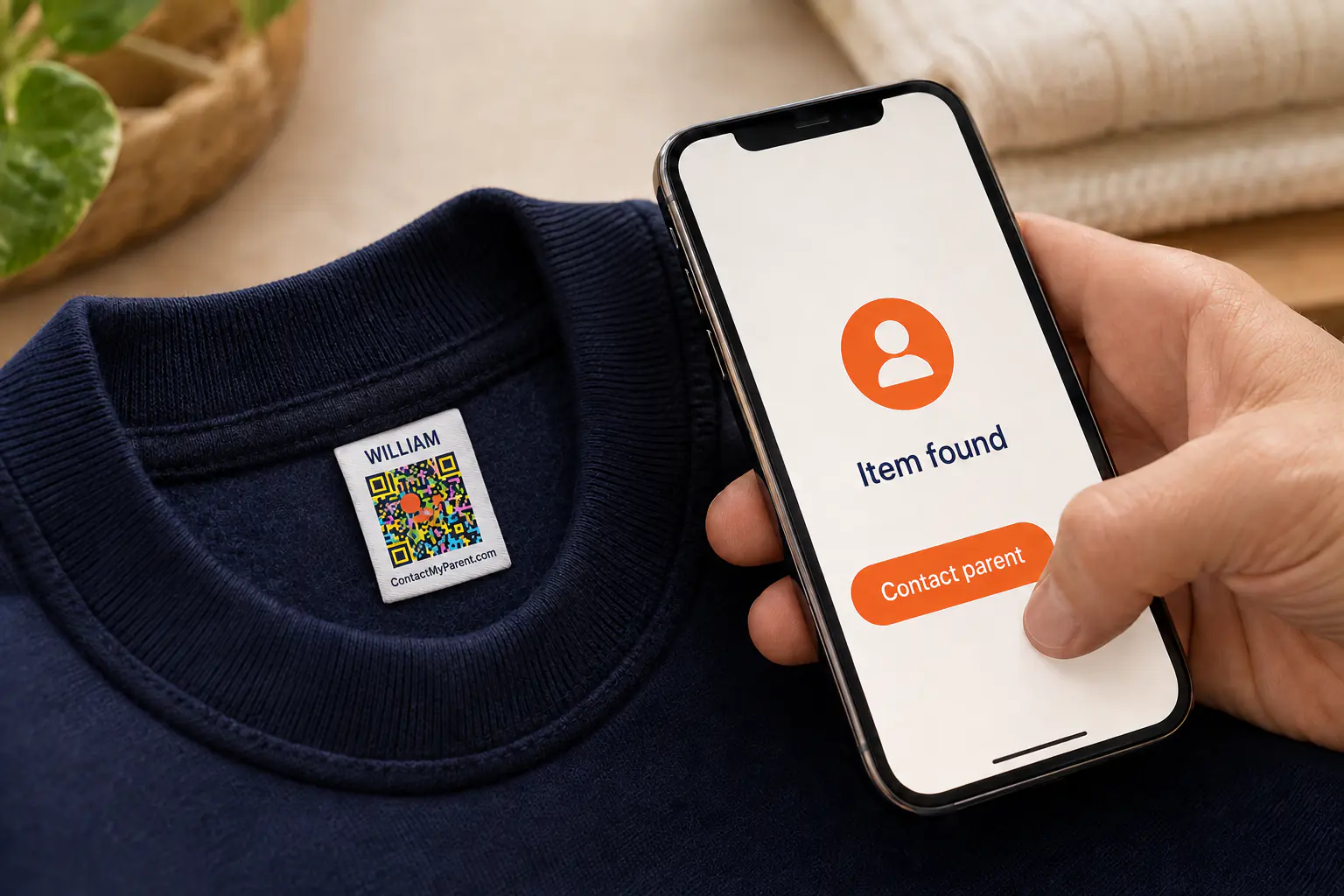
A finder needs your number in seconds, not a form.
The person who finds a confused parent is usually a neighbor, a shop worker or a bus driver, not a police officer. They scan the QR code with any phone camera, no app, and see the name, who to call and anything you choose to share, such as a condition or a medication.