Family guide
How to label clothes for a nursing home so they actually come back
What to write, where to put it, which of six labeling methods survive a 160 degree commercial wash and which peel off in the first month, how many items a move-in really needs, and a one-page inventory sheet to hand the nurse manager on admission day.
Author: Muarij Kerio · Reviewed September 2026 · Sourced from the CDC, federal nursing home regulations and family caregiver reports, linked inline · General information, not legal advice
The short answer
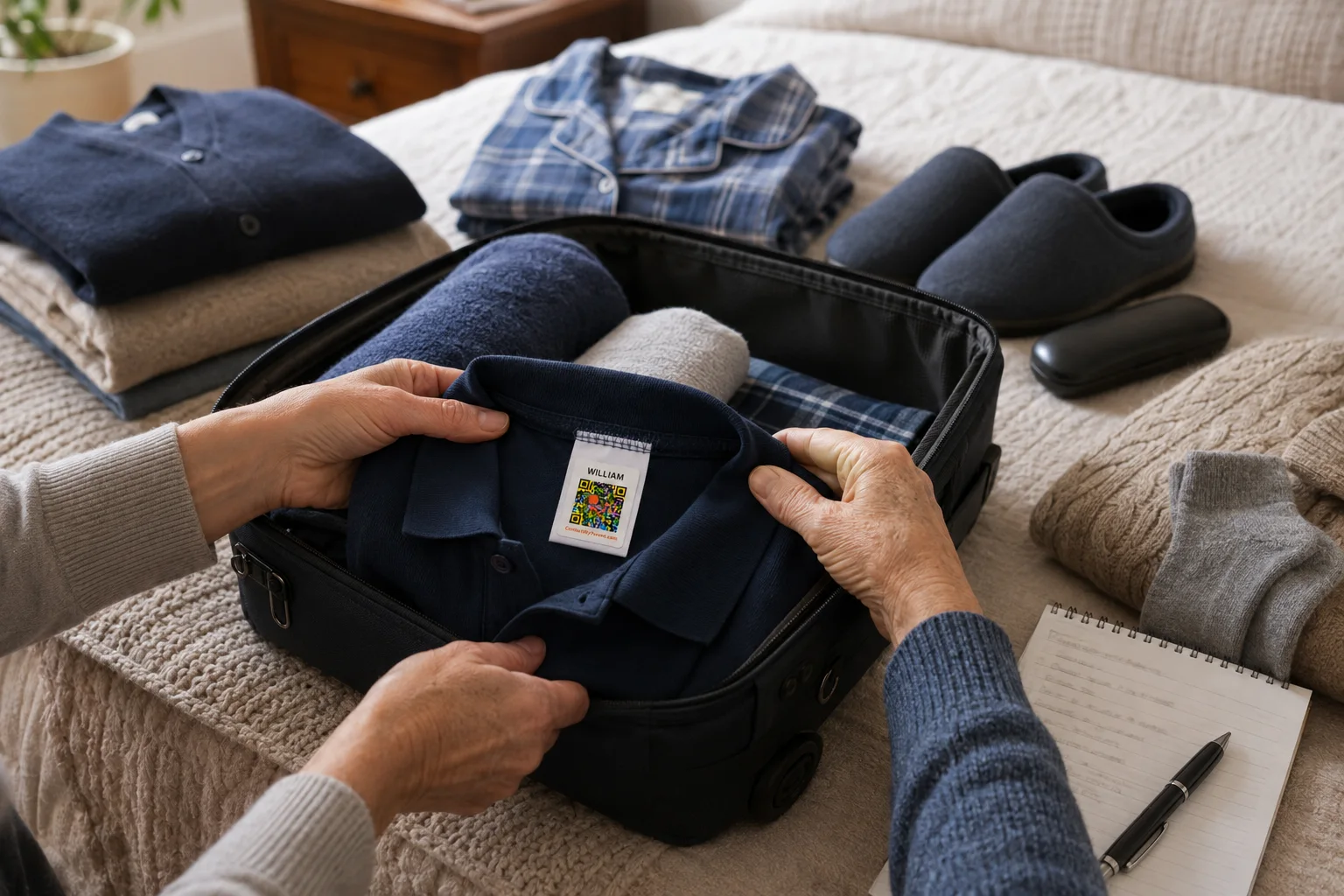
Label every single item, including socks and underwear, with your parent's name in a method rated for hot commercial laundry, placed on the care tag or inside the collar or waistband. Add your phone number to anything that might leave the building: coats, cardigans, the walker. Photograph the whole wardrobe laid out on the bed, write it down, and hand the facility a copy. Then accept that a label brings clothes back; it does not stop them going missing in the first place.
The reason to be this thorough is not fussiness. Healthcare laundry runs hot: the CDC's environmental infection control guideline notes that “a temperature of at least 160°F (71°C) for a minimum of 25 minutes is commonly recommended for hot-water washing,” followed by a hot dryer. (CDC, Laundry and Bedding) Whatever you write or attach has to survive that, weekly, for years.
Why clothes disappear, and what the law says
Facility laundry washes dozens of residents' clothes together, then folds and redistributes them by whatever mark is on the garment. Anything unlabeled is guesswork, and the guess goes to a closet down the hall. Add a resident who “shops” in neighbors' wardrobes, a hospital stay that changes the room number, and a batch split between two machines, and you have the most common complaint on caregiver forums. One family in an AgingCare thread ironed custom labels onto every item their mother owned and reported that they still did not stay on, which we come back to below. (AgingCare, How to label clothes for long term care)
The facility is not a bystander. Federal nursing home regulations give every resident “the right to retain and use personal possessions, including furnishings, and clothing, as space permits,” and require that “the facility shall exercise reasonable care for the protection of the resident's property from loss or theft.” (42 CFR 483.10(e)(2) and (i)(1)(ii)) Labels and an itemized inventory are what turn that sentence into a cardigan returned.
What to write on the label
- Name, always. First name and surname, or first name and last initial if you prefer less on show. This is what the laundry sorts by.
- Phone number on anything that leaves the building. Coats, cardigans, hats, the walker. If your parent walks out of the building, or a jacket ends up at the day center, the number is what gets it home. It matters most for a resident living with dementia.
- Room number only if the facility asks. Rooms change. A wrong room number is worse than none.
- Not the address. Nothing on a garment should lead a stranger to an empty house.
Six labeling methods compared
Costs are typical US retail in September 2026 for a 50-item wardrobe. The fourth column is the one that matters, and it is where most online advice is vague.
| Method | Cost for 50 items | Time for 50 items | Survives hot commercial laundry? | Fails when | Best for |
|---|---|---|---|---|---|
| Laundry marker | $5 to $10 | 20 minutes | Mostly; fades after months of hot washes and bleeds on some knits | Dark fabrics, stretchy fabric, anything you want to look nice | Socks, underwear, towels |
| Sew-in woven name tape | $15 to $30 plus thread | 3 to 5 hours by hand | Yes, the most durable method | You have 50 items and one evening; can be cut out by another resident | Coats, heirloom knits, anything worth the time |
| Iron-on label on the garment fabric | $10 to $40 | About an hour | Only on stable cotton with the full press; peels from fleece, stretch knits and seams | Pressed for a few seconds, steam left on, or applied to synthetic stretch fabric | Cotton tops and pants without a care tag |
| Iron-on label on the care tag | $14 to $39 | About an hour | Yes, when pressed for the full time; the polyester tag is flat, stable and takes heat | Tag has been cut out, or the label is peel-tested before it cools | Everything with a tag, which is most of the wardrobe |
| Stick-on tag labels (no iron) | $10 to $25 | 30 minutes | Several months on care tags, then edges lift | Applied to fabric instead of the tag; any tumble dry over 50 cycles | Short stays, respite care, rehab |
| Facility heat-seal service | Often $0.50 to $2 per item | Handled at intake | Yes, industrial press | Not offered, or items arrive after intake and skip the queue | Families who cannot label before admission |
Why iron-on labels fall off, and how to make them stay
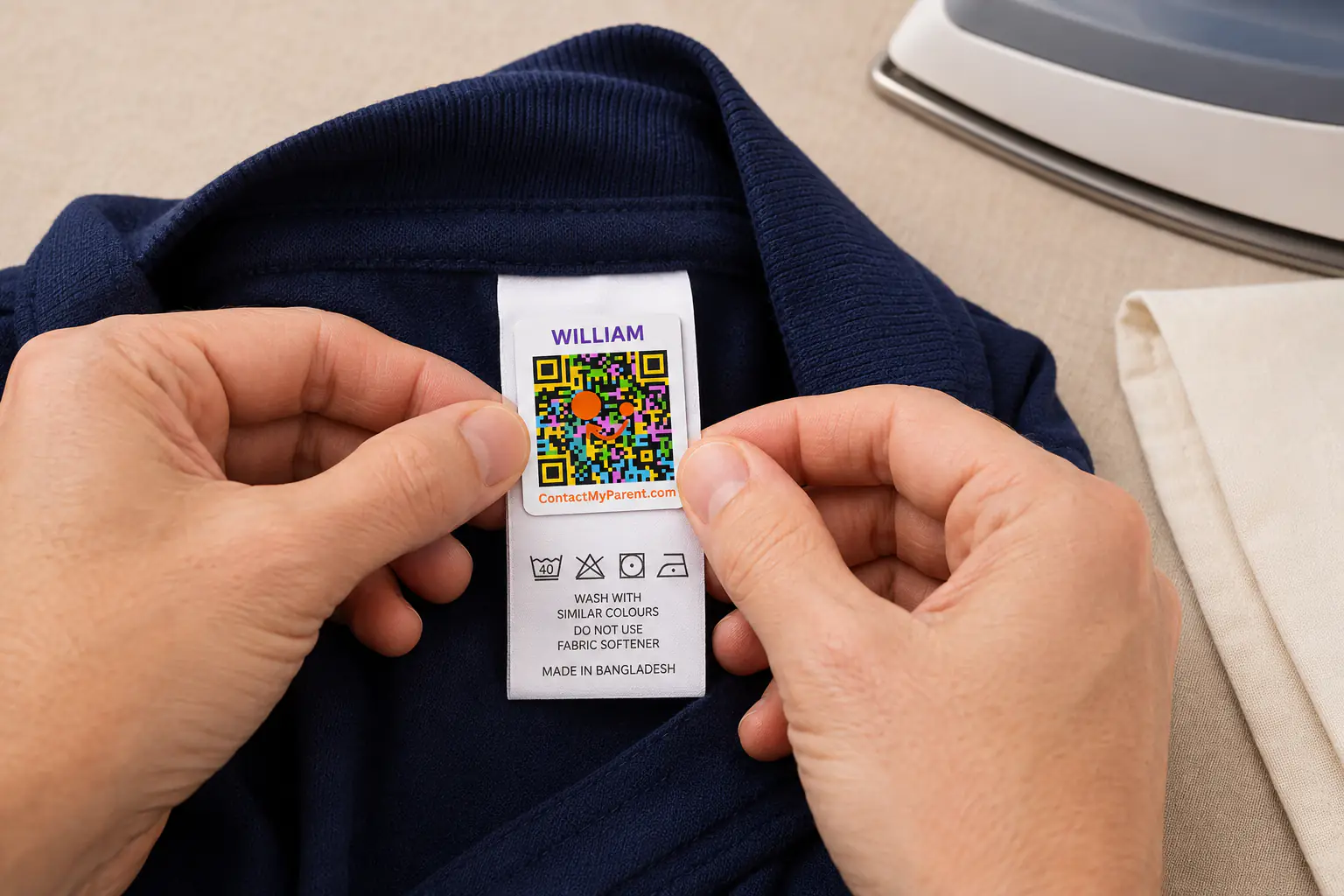
The AgingCare complaint above is real and common, and since we sell iron-on labels it deserves a straight answer. Iron-ons fail for three reasons, all avoidable. The label goes onto the wrong surface: fleece, stretch knit, ribbing or across a seam, where the fabric moves and the adhesive cannot grip. The press is too short or too cool, often because the iron is on a steam setting, so the adhesive softens but never bonds. Or the label is peeled to “check it” while still warm, which breaks the bond before it sets.
- Choose the care tag, not the garment fabric, wherever one exists.
- Dry iron, cotton setting, no steam. Empty the water tank so it cannot spit.
- Press for the full time on the pack, usually 10 to 15 seconds with firm pressure through the parchment sheet. Do not slide the iron.
- Let it cool completely before you touch it, and wait 24 hours before the first wash.
- For garments with no tag, use the inside back collar or waistband on stable cotton only, and choose marker or sew-in for fleece and stretch.
Where to put the label, garment by garment
Tops, sweaters, cardigans, nightwear
Care tag first; otherwise inside the back of the collar, never on the ribbing
Pants, shorts, underwear
Care tag first; otherwise inside the back waistband, flat section only
Socks
Laundry marker on the sole of both socks. Buy several identical pairs so an orphan still has a partner
Shoes and slippers
Inside the tongue or heel with a marker, or a stick-on label under the insole
Coats and jackets
Care tag, plus a card with your phone number in an inside pocket
Blankets, towels, pillowcases
Corner hem, sewn or ironed; these get mixed with facility linen the most
How many items to pack and label
Facility laundry runs on a weekly cycle for most residents, so plan a week of clothes plus spares for accidents. AgingCare's move-in checklist suggests at least seven pairs of pants, seven tops and ten pairs of underwear, and to skip anything dry-clean-only. (AgingCare, Moving into a nursing home) With socks, nightwear, sweaters, a coat and footwear, a typical admission comes to 45 to 60 items, which is why our largest pack holds 50 labels. The printable below has the full count with a column to tick as you label.
Label the non-clothing too. Glasses, hearing aids and their case, the denture cup, phone and charger, walker, wheelchair cushion, blankets and pillows. These are the items families report missing most, and the ones that cost most to replace.
Where our label fits
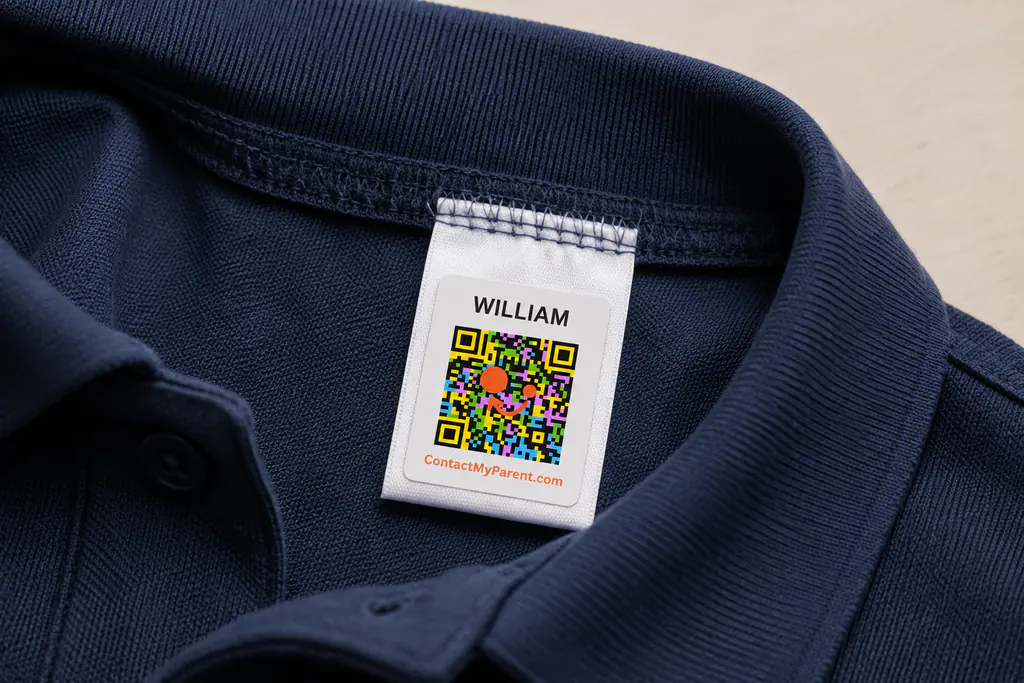
ContactMyParent clothing labels for nursing homes are sized for the care tag, rated for hot commercial laundry when pressed for the full time, and carry the name plus a QR code. The laundry team reads the name. Anyone who finds a resident who has walked out, or a coat left at the day center, scans the code with a phone camera and reaches you, and you can change the number online without relabeling anything.
The honest boundary. No label stops a mix-up at the folding table or a neighbor borrowing a sweater. Photograph the wardrobe and keep the inventory current. And for socks, a marker still wins.
Questions families ask
Should I put the room number on the label?
Only if the facility asks for it, and expect it to go stale. Rooms change after a hospital stay, a fall or a move to memory care, and a wrong room number sends the cardigan to the wrong closet with confidence. Name always. A phone number for anything that leaves the building. Room number as a third line only when the laundry team says they sort by it.
Do nursing homes require you to label clothing?
Nearly all ask for it in the admission paperwork, and some offer to heat-seal labels themselves for a per-item fee. The legal side runs the other way: under 42 CFR 483.10 residents have the right to keep and use their own clothing, and the facility must exercise reasonable care to protect resident property from loss or theft. Labeling and an itemized inventory are how you hold them to that.
What is the best way to label socks for a nursing home?
A laundry marker on the sole of each sock, written large, and a policy of buying the same sock in bulk. Iron-on labels do not hold on the stretchy cuff, and sew-in tapes are slow at twenty pairs. If a sock walks off, an identical pair means nothing is truly lost.
Why did my iron-on labels come off in the nursing home laundry?
Three usual reasons. The label went onto stretch fabric, fleece or a seam rather than a flat stable surface. The press was too short or the iron was set to steam, so the adhesive never fully melted. Or the label was peeled to test it while still warm. Iron onto the polyester care tag with a dry iron for the full time, let it cool untouched, and wait a day before the first wash. Applied that way it survives 160 degree washing.
Who is responsible when clothing goes missing?
Ask for the missing item in writing, with the photo and the inventory line, through the facility's grievance process. Federal rules require reasonable care of resident property and forbid facilities from making residents waive liability for lost items. Most facilities have a lost-and-found bin in the laundry; ask to see it, because labeled items usually end up there rather than gone.
How do I remove nursing home clothing labels?
Sew-in tapes: snip the stitches with a seam ripper. Iron-ons: heat the label again with a dry iron through parchment for 10 seconds, then peel from a corner while warm; rub any residue with rubbing alcohol on a cloth. Stick-on labels: warm with a hairdryer and peel. Marker does not come out, which is why it is best kept to socks and underwear.
Free inventory and label checklist
One Letter page: the clothing inventory with suggested counts and a tick column, where each label goes, the non-clothing items, and the four questions to ask the nurse manager before you leave. Hand one copy in at admission and keep one.
Download the PDF